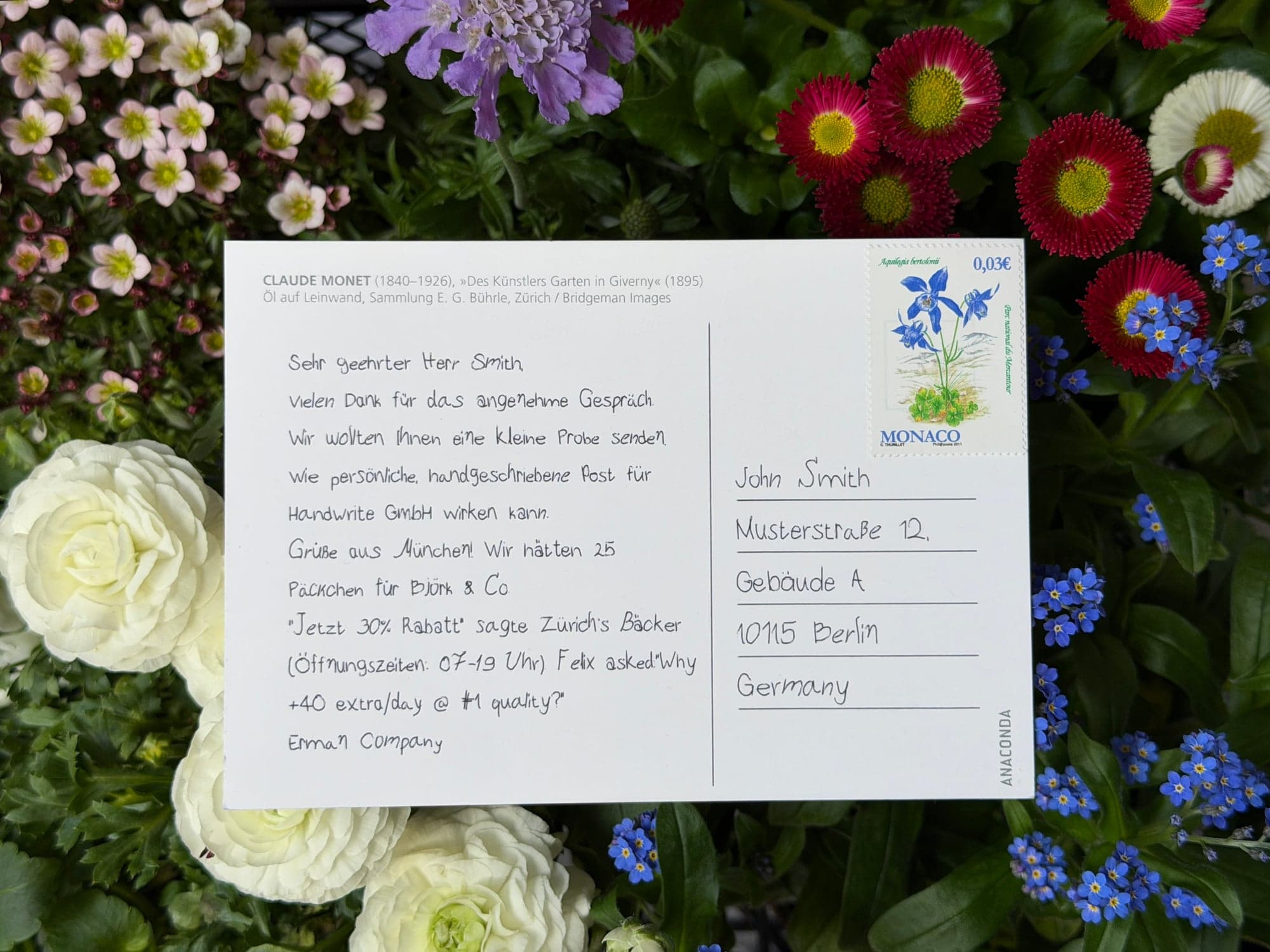
Personal mail, without writing every card by hand.
Handwrite turns a note and a recipient list into cards written with a real pen. The work connects the customer experience to the production queue, the machine, and fulfilment.
Sample postcard · imagery from the Handwrite product
The problem
The personal part doesn’t scale easily.
A thank-you, a follow-up, a note to someone who matters. Physical mail has a place in those moments, but writing, addressing and preparing every card makes a larger send hard to manage.
The product question: how much of that work can software take on while keeping the message personal and the physical output under control?
A postcard or a card with an envelope. Pick artwork and a handwriting style.
02
Compose
Write a personal message. Add one recipient or import a CSV list and personalise the note.
03
Review
Inspect the preview before ordering. Production has a separate review before a machine starts.
04
Make & send
A pen plotter writes the message. The cards are checked, finished and prepared for dispatch.
Product decisions
Where the interface meets the real world.
One message, many recipients
A campaign should not mean composing the same card over and over.
Templates and recipient data work together, with previews for individual recipients. Fit checks account for the personalised message, including longer names.
A preview that respects the paper
A message can look fine in a text box and still fail on a physical card.
The preview and production pipeline share handwriting assets and layout constraints. Unsupported characters and messages that do not fit are caught before production.
A deliberate step before ink
Payment and production are different commitments.
Web payments are authorised before production review. Approval captures the payment and creates the print jobs. Failures after writing starts require attention rather than an automatic second copy.
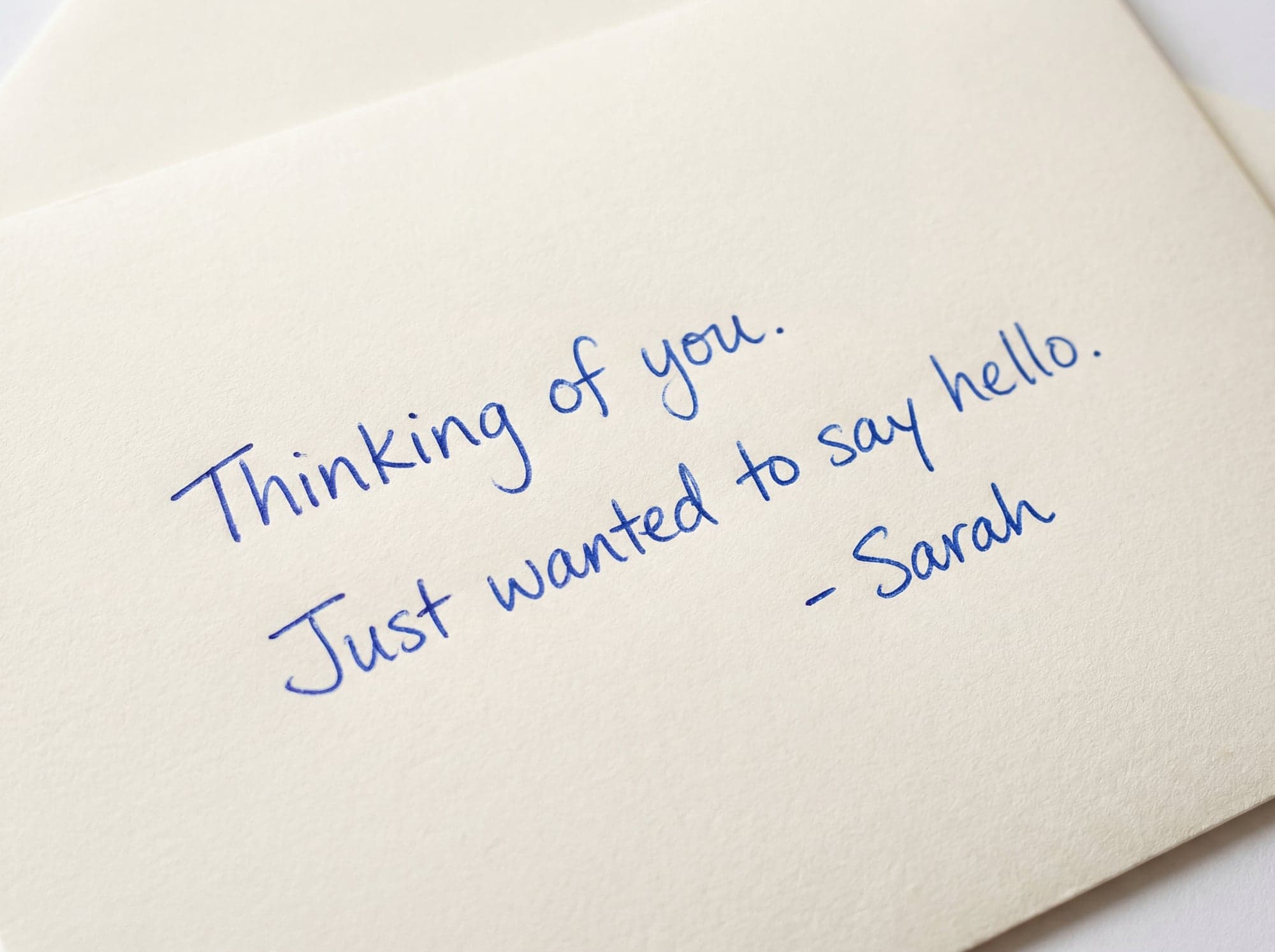
Handwrite product imagery · ink and paper detail
Under the surface
The handwriting is part of the system.
Recorded pen strokes, multiple character variants and vector rendering carry the message from the browser into instructions a plotter can follow. Calibration, paper placement and operator checks remain part of making a good card.
The public product offers single sends and CSV campaigns. The web order flow supports postcards and cards with envelopes; production review and fulfilment remain explicit steps.
This case study describes the product and its implementation. It does not claim a measured increase in response rates or customer revenue.