NASA Artemis II: The Mission Setting the Stage for a New Era of Lunar Exploration
NASA's Artemis II mission is set to fly four astronauts around the Moon in early 2026, marking a significant return to deep lunar space since Apollo 17.
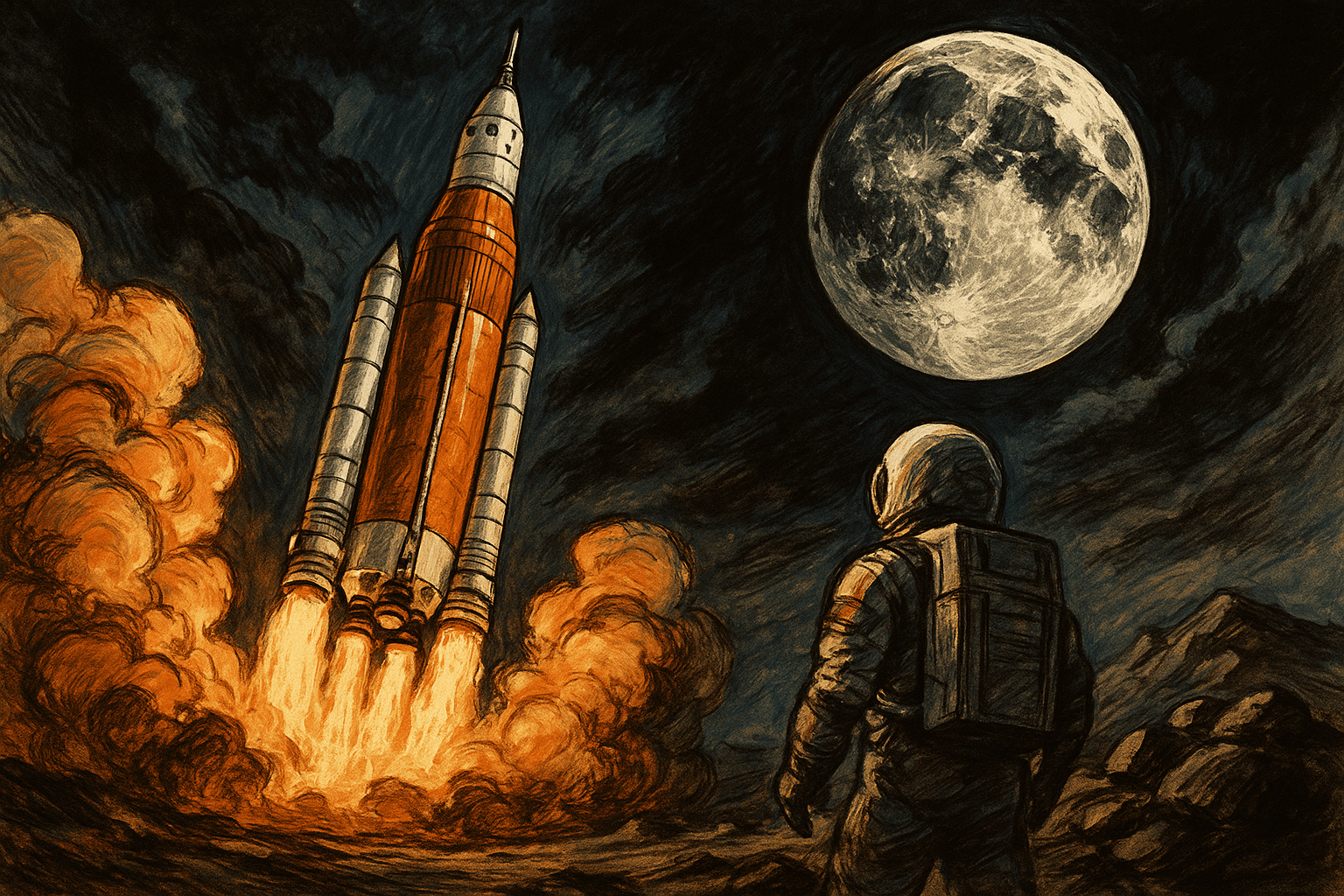
NASA's Next Trip to the Moon: Artemis II
Estimated Reading Time: 7 minutes
- Rigorous Testing and Safety Always Lead: NASA prioritizes human safety and reliability in space missions.
- Technology from Artemis Benefits Earth and Mars: Advances in life support and automation have wider applications.
- Transparency is Now a Norm: Live updates and outreach make lunar exploration accessible to all.
- Lunar Exploration is International and Commercial: Collaborative efforts across nations and industries are crucial.
- Every Artemis Mission Builds Rather Than Repeats: Each mission enhances learning for future explorations.
Table of Contents
- Industry Trends & Background
- Artemis II: The Key Mission Details
- Why Artemis II Was Delayed—and Why It Matters
- Technological Innovations and Crew Safety Upgrades
- Insights from Recent Research
- NASA's 24/7 Public Engagement
- Artemis III and Beyond: Building Toward a Lunar Base
- The Artemis Program's Broader Vision: Moon to Mars
- Public and Commercial Excitement
- Practical Takeaways
- Final Thoughts & What's Next
Industry Trends & Background
NASA's Artemis program signals a new "golden age of exploration and innovation," blending lessons from Apollo with 21st-century technology and global collaboration (NASA). The Artemis II mission is at the vanguard, acting as the bridge between the all-robotic Artemis I test flight in 2022 and future human landings.
Artemis II: The Key Mission Details
- Mission Purpose: Artemis II is the first crewed Artemis launch, performing a lunar flyby—with no surface landing yet. The core objective is to validate life support, navigation, propulsion, power, and communications: all the systems required for sustained deep-space travel (NASA Mission Overview).
- The Crew: Four astronauts will ride aboard the Orion spacecraft: Commander Reid Wiseman, Pilot Victor Glover, Mission Specialist Christina Koch, and Canadian astronaut Jeremy Hansen—making it a truly international effort (Space.com).
- Launch Vehicle: NASA's Space Launch System (SLS), the most powerful rocket ever built, is set to blast Orion from Kennedy Space Center on a trajectory around the Moon and back (ASME).
- Duration: About 10 days from liftoff to splashdown.
- Trajectory: The mission employs a "distant retrograde orbit": Orion will loop around the far side of the Moon and then return to Earth—a high-stakes test of deep-space navigation and real-time crew support.
Why Artemis II Was Delayed—and Why It Matters
Originally targeted for late 2025, Artemis II slipped to April 2026 after NASA discovered unexpected material loss on the Orion capsule's heat shield during Artemis I (Wikipedia, Space.com). As NASA Administrator Bill Nelson explained, this finding prompted extensive re-analysis, design tweaks, and new rounds of testing to guarantee astronaut safety for the next flight. Despite some internal talks of launching as early as February 2026, April remains the latest official window.
This cautious, data-driven approach highlights a defining trend in modern human spaceflight: safety, system reliability, and mission assurance come before all else, even if it means enduring public impatience or increased program costs.
Technological Innovations and Crew Safety Upgrades
Artemis II will showcase advanced Environmental Control and Life Support Systems—better at removing carbon dioxide, controlling humidity, and managing deep-space temperatures than any previous NASA mission. Real-time radiation sensors, up-to-date medical kits, and always-on crew health telemetry were incorporated to ensure not only immediate survival but also robust data for future Mars missions.
Essentially, every system on Artemis II, from the heat shield to the comms panel, doubles as both a tool for this flight and a preview for longer, riskier journeys ahead.
Insights from Recent Research
Crew, Technology, and the Artemis Test Strategy
The Artemis II crew has spent years preparing: practicing re-entry simulations, running emergency drills, and collaborating with engineers on every system. NASA emphasizes that Artemis I's 25-day robotic lunar loop (in 2022) set an excellent safety and systems baseline, but crewed flights add exponentially more complexity. That's why Artemis II serves as a full-scale rehearsal, lowering the risk for future lunar landings.
NASA's 24/7 Public Engagement
A distinctive component of Artemis II is NASA's ongoing commitment to transparency and public outreach. From live mission coverage and interactive Q&As to behind-the-scenes engineering reveals, NASA is making sure anyone with an internet connection can follow the journey in real time (NASA Artemis II News). This level of access isn't just about hype; it's about education, accountability, and encouraging the next generation of STEM leaders.
Artemis III and Beyond: Building Toward a Lunar Base
While Artemis II headlines today's news, the real story is how it sets the stage for the first human lunar landing since 1972. Artemis III (no earlier than mid-2027) will aim to put two astronauts—including the first woman and the first person of color—on the Moon's south pole (RMG Space). They'll travel aboard Orion, link up with a commercial Human Landing System (SpaceX's Starship HLS), touch down, explore, and return after about 30 days.
Subsequent missions (Artemis IV in late 2028, Artemis V in 2030) will deploy critical lunar infrastructure:
- The Gateway: A small, modular space station in lunar orbit for science, crew transfer, and mission staging.
- Habitat Modules: Living and working quarters like the ESA-JAXA I-Hab.
- Rovers and Robotics: Tools for ranging, construction, and science—supplied by NASA, ESA, and partners like Canada and Blue Origin.
All of this isn't just to plant flags and footprints. It's deliberate groundwork for lunar permanence, enabling teams to understand robotics, remote operations, and resource management in another-world environment—essential if humanity is to reach Mars.
The Artemis Program's Broader Vision: Moon to Mars
NASA's stated goal is to establish a "long-term human presence on and around the Moon," using lessons learned from the Artemis missions to de-risk technologies and workflows for interplanetary expeditions (NASA Artemis II). The agency's "Moon to Mars" roadmap includes:
- Proving habitat resilience, life support, and power systems in lunar conditions.
- Practicing autonomous and remote operations at scale—adaptable for Mars missions.
- Training astronauts and robots to work together in hazardous, communication-delayed environments.
- Building up the logistics chain, from resource harvesting on the Moon to distributed construction and repairs.
Increasingly, NASA collaborates with private industry and multinational partners, broadening both the budget and expertise for these ambitious plans.
Public and Commercial Excitement
Public interest in Artemis II is already at fever pitch. NASA's engagement efforts—livestreamed launches, social Q&As, and open science communications—have drawn record viewership. This enthusiasm has helped unlock bipartisan Congressional support and spurred a new era of commercial engagement, with companies from SpaceX to Blue Origin building critical lunar infrastructure (Space.com).
Artemis II, then, isn't only a science milestone—it's a cultural phenomenon. It represents an inclusive and collaborative future for exploration, reminding us that space is everyone's frontier.
Practical Takeaways
- Rigorous Testing and Safety Always Lead: NASA's reaction to Orion's heat shield anomaly demonstrates a modern engineering principle: human safety comes first, no matter the delay. Space missions of this complexity will always prioritize verifying, refining, and retesting all systems before sending crew.
- Technology from Artemis Benefits Earth and Mars: Artemis II's upgraded Environmental Control, crew health sensors, data telemetry, and modular spacecraft design aren't just for the Moon. These advancements can ripple into commercial aviation, health monitoring devices, and future Mars technologies.
- Transparency is Now a Norm: NASA's open livestreams, constant updates, and interactive outreach make lunar exploration a shared global experience. This level of transparency can inspire business leaders and tech innovators to adopt similar high-engagement models for their own transformative projects.
- Lunar Exploration is International and Commercial: It's not just NASA: Artemis II includes Canada's astronaut, with Artemis III and later flights involving European, Japanese, and commercial partners. The trend points to a future where lunar science and industry operate more like a global consortium than a single-nation race.
- Every Artemis Mission Builds Rather Than Repeats: Rather than a one-and-done achievement, each Artemis step is a progressive testbed for the next frontier. Teams practicing workflows in lunar orbit will refine automation, robotics, and AI-driven mission control—lessons directly applicable for business innovation here on Earth.
- Practical Automation Lessons for Industry: Artemis's reliance on modular, automated systems mirrors the evolution in business workflows powered by AI and tools like n8n. Automating mission-critical processes, error detection, and real-time analytics in hostile environments is a rich well of insight for companies automating complex, mission-critical business systems.
Final Thoughts & What's Next
The Artemis II lunar flyby—now targeting a launch no earlier than February and no later than April 2026 (Space.com, NASA)—marks the world's bold return to human deep-space flight. Its success will unlock the next chapter: landing astronauts on the Moon's south pole, building a permanent lunar foothold, and setting our ambitions on Mars.
As this milestone approaches, curiosity about the future of automation, workflow optimization, and AI-driven decision-making only grows louder. Artemis II isn't just about astronauts and rockets: it's a living example of what happens when the best of human ingenuity, safety-first design, and automated systems come together for a shared goal.
For organizations and innovators inspired by NASA's approach—from modular workflow automation to integrated AI control—the lessons from Artemis II offer a roadmap for tackling complex, high-stakes projects. Interested in how cutting-edge AI consulting or workflow automation can propel your business forward—here on Earth or in the next digital frontier? Connect with the experts at Erman's team to explore how the spirit of Artemis can ignite new possibilities in your mission.
FAQ Section
What is Artemis II? Artemis II is NASA's first crewed mission set to fly four astronauts around the Moon in early 2026, marking a significant return to deep lunar space since Apollo 17.
What are the major goals of Artemis II? The main objectives include validating life support and navigation systems necessary for deep-space travel, while also laying groundwork for future lunar landings.
Why was Artemis II delayed? The mission was delayed due to unexpected material loss on the Orion capsule's heat shield, necessitating comprehensive re-analysis and retesting to ensure astronaut safety.
What is the significance of Artemis II? Artemis II is significant as it underscores NASA's commitment to safety and innovation while paving the way for a sustainable human presence on the Moon and future missions to Mars.
How does Artemis II compare to past missions? Artemis II is distinct from past missions because it not only builds on decades of lunar exploration but also incorporates modern technology and international collaboration for sustained space exploration.